Last updated November 22, 2026
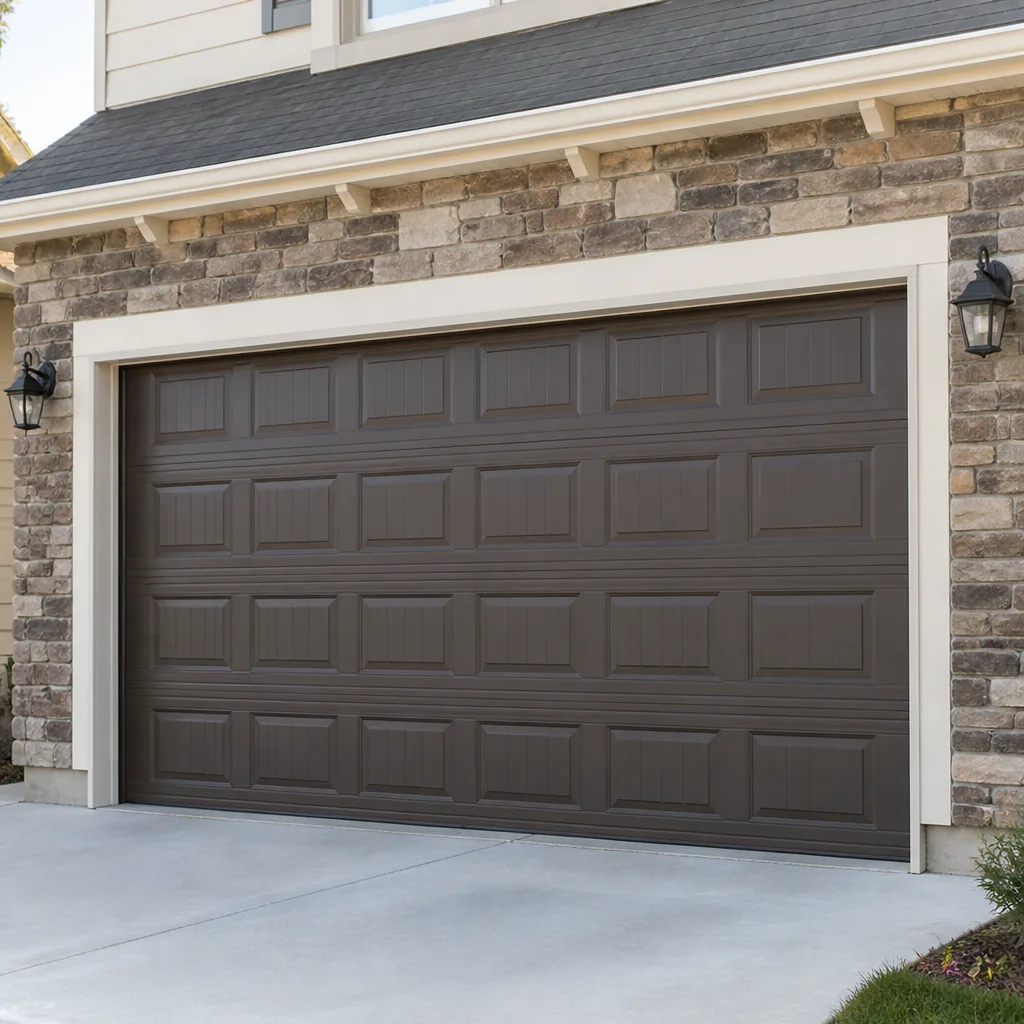 Raised-panel steel
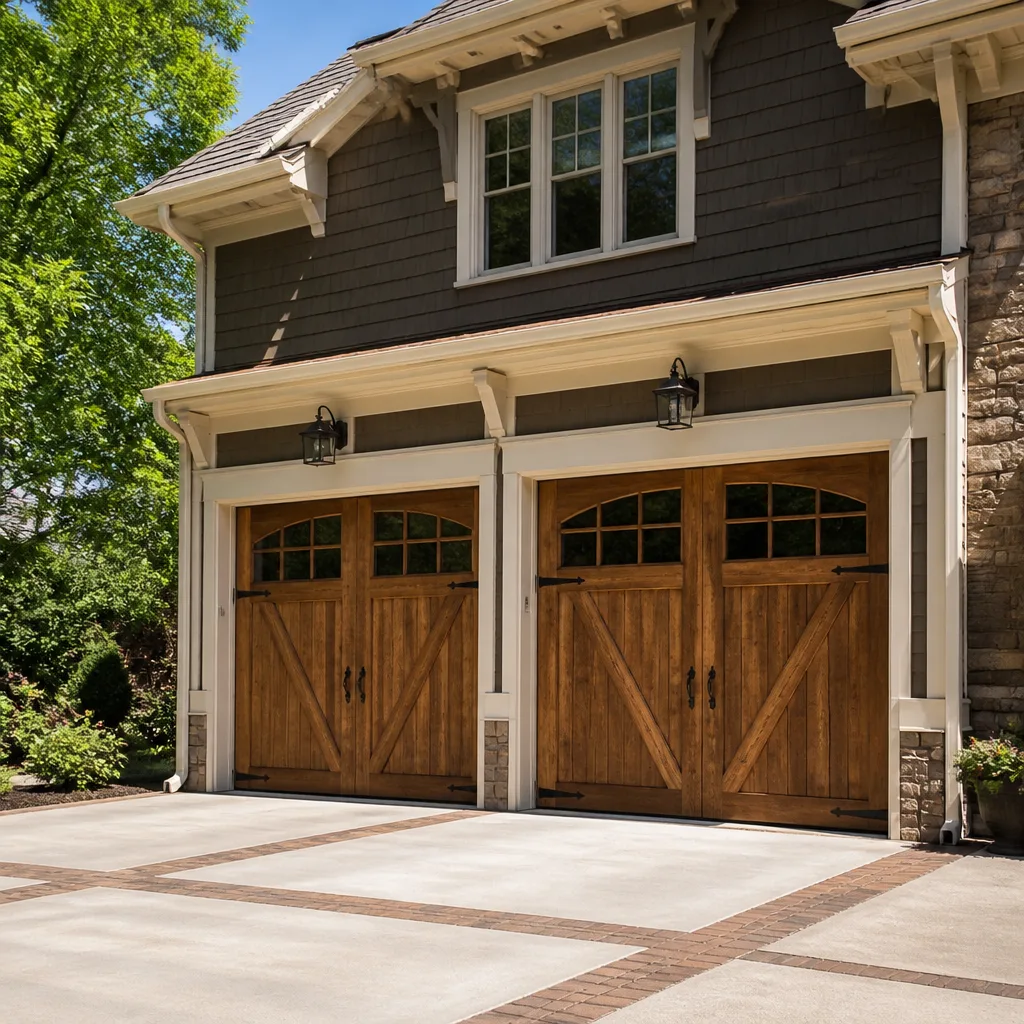 Carriage house
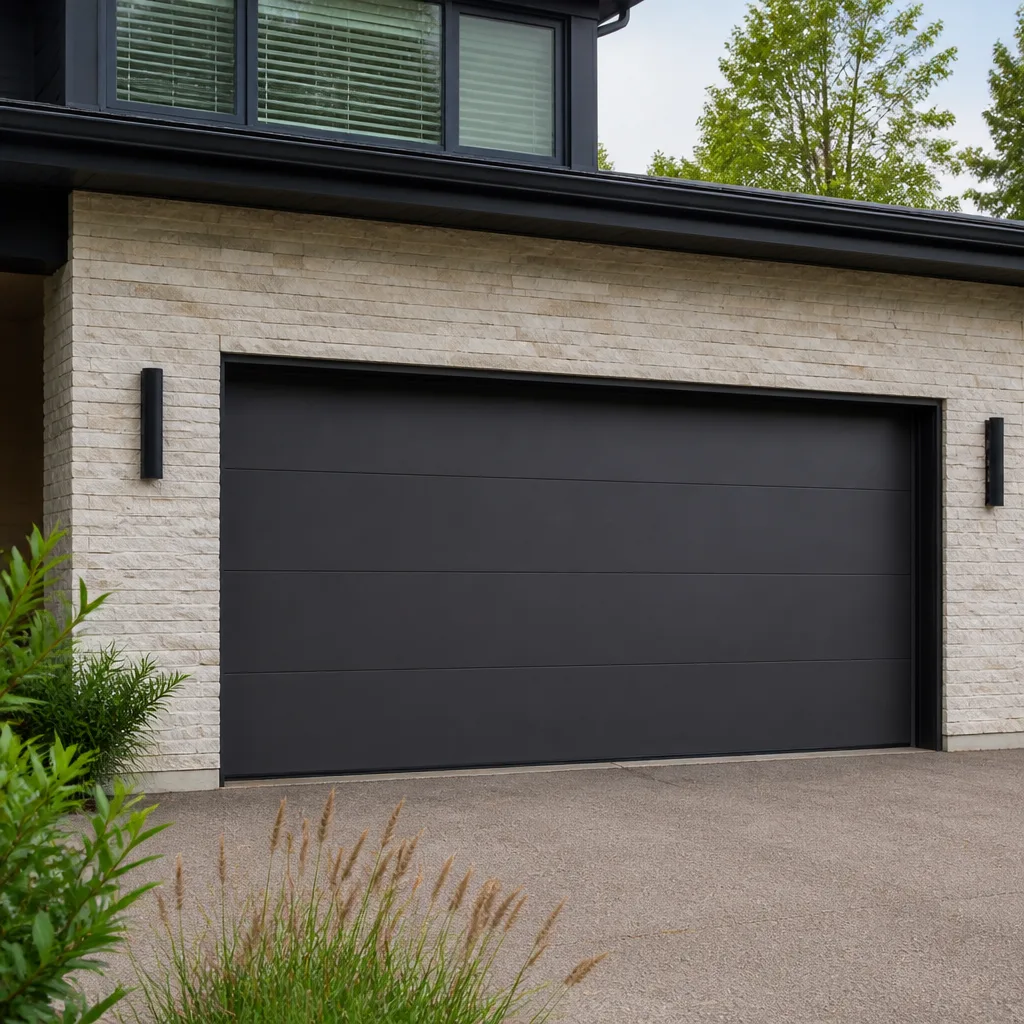 Modern flush
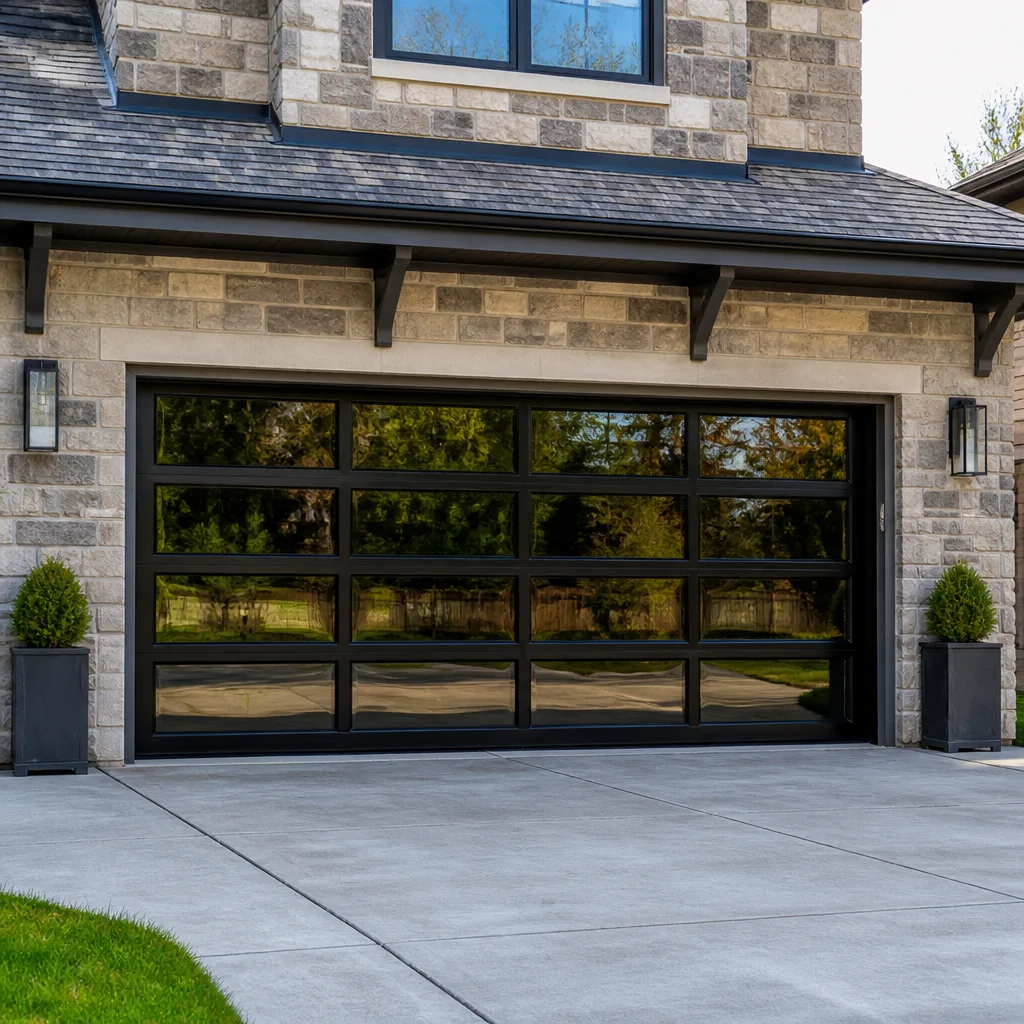 Full-view glass
 LiftMaster openers
 Chamberlain openers
Full 25-point door and opener safety check with every visit - springs, cables, rollers, tracks, and your LiftMaster or Chamberlain opener included
You get a price before we start. It does not change when the pro arrives.
Get your free estimateHow to Hire a Garage Door Contractor in Elmhurst: A Step-by-Step Guide
Illinois doesn’t issue a garage door contractor license. That’s the uncomfortable fact most hiring guides skip. It means the person who pulls into your Elmhurst driveway could have three weeks on the job or twenty years, and the estimate sheet in their hand looks identical either way. No state board checks their spring knowledge. No exam confirms they know your Clopay carriage-house door from a Wayne Dalton model. The hiring decision is entirely yours, so it pays to know exactly what separates a skilled technician from a truck with a logo. This guide walks through the questions, the paperwork, and the red flags that do the separating.
Quick Answer
To hire a garage door contractor in Elmhurst, verify general liability and workers’ compensation insurance before booking, ask three phone questions that reveal whether you’re talking to a local specialist or a lead-reselling call center, and insist on a written estimate with itemized parts and labor. Treat any quote that’s dramatically below the others as a bait-and-switch until proven otherwise. A legitimate contractor will welcome those checks; a bad one will get defensive.
Styles & brands we work with
- Raised-panel steel
- Carriage house
- Modern flush
- Full-view glass
- LiftMaster openers
- Chamberlain openers
Table of Contents
- What insurance should a garage door contractor carry in Illinois?
- What three phone questions expose a call center?
- What belongs in a legitimate written estimate?
- Why is the cheapest quote usually a bait-and-switch?
- How do you tell real local reviews from farmed ones?
- Why is spring work the real test of a contractor?
- Why does brand knowledge matter for your specific door?
- How does the Elmhurst climate affect garage door wear?
What insurance should a garage door contractor carry in Illinois?
A garage door contractor working at your Elmhurst home should carry general liability insurance and workers’ compensation coverage for anyone on the job. General liability protects your property if a door panel gets dropped or a track bends a car in the driveway. Workers’ compensation covers the worker if they’re injured on your property, which matters enormously because a spring under tension can cause serious injury in an instant.
Why the emphasis on workers’ comp? Without it, an injured worker may look to your homeowner’s policy to cover medical costs. That’s a financial exposure most homeowners don’t think about when they book a repair.
Verifying coverage takes about two minutes. Here’s how:
- Ask for a certificate of insurance before the appointment, not after.
- Check that the certificate names the company you’re actually hiring, not a different entity.
- Confirm the general liability and workers’ comp lines are both listed and current.
- Call the insurance agent’s number printed on the certificate to confirm the policy is active.
Any reputable contractor will send this without hesitation. If a company stalls, changes the subject, or says they’ll “bring it with them,” treat that as a real warning sign. The local professional we connect you with is licensed and insured as their state requires, and confirming the paperwork is part of the job, not an inconvenience.
What three phone questions expose a call center?
Many “garage door companies” in the Chicago suburbs are dispatch operations. They answer the phone, take your address, and sell the lead to whichever technician is available. The person on the line has never seen a torsion spring and can’t tell you anything useful about your door. Three questions cut through that fast.
Question one: “What brand and model of opener do I have?” A specialist will ask you to snap a photo or read the label, then tell you whether it’s a LiftMaster, Chamberlain, Genie, or an older Craftsman unit. A call center will say “we work on all brands” without engaging.
Question two: “Who will actually do the work, and can I talk to them?” A local specialist can describe the technician and their experience. A lead broker can’t, because they don’t know yet who’s buying the job.
Question three: “What’s your service area around Elmhurst?” A company that genuinely works in Elmhurst can talk about the neighborhoods it covers and how the local housing stock shapes the work. A call center reads from a zip code list.
Notice how none of these questions require the company to bad-mouth anyone. You’re just listening for specificity. Vague answers from a smooth voice are more telling than a slightly rough answer from someone who clearly knows doors.
What belongs in a legitimate written estimate?
A written estimate should let a stranger read it and understand exactly what will happen and what it will cost. If you can’t picture the work from the paper in your hand, the estimate isn’t finished.
Here’s what a real estimate includes:
- Itemized parts: the specific spring gauge and length, cable type, roller type, or opener model by name. “Springs” alone tells you nothing.
- Itemized labor: a separate figure for the work itself, not folded into a single mystery price.
- Brand and model of any replacement opener if you’re getting one, not just “a new opener.”
- Warranty terms in writing: how long the parts are covered, how long the labor is covered, and what voids it.
- Whether disposal of old parts is included.
- Your written approval before work begins. The price you agree to is the price, and any changed scope requires a new conversation first.
Watch for these red flags on an estimate sheet:
- One lump price with no breakdown at all.
- “Springs and tune-up” wording that leaves the actual spring spec blank.
- An estimate given verbally and never emailed or handed over.
- Terms that let the price “adjust” after the technician arrives.
For a full replacement, tie the estimate to a free measure and a written price rather than a phone guess. Measuring, ordering, and scheduling a new door is a scheduled job, so a professional will want to see the opening before committing to a number. That’s a good sign, not a delay.
Why is the cheapest quote usually a bait-and-switch?
A quote that lands well under the rest usually isn’t a bargain. It’s an opening move. In our experience, the low number is often attached to an under-spec spring, a low-cycle part, or a price that’s only honored if the technician finds “something else wrong” once they’re in your garage.
Spring bait-and-switch is the most common version. A torsion spring is measured in cycles – the number of open-and-close movements it’s rated for. A budget spring and a heavyweight spring look similar on the invoice cheap version rarely names the cycle rating, and that omission is the whole trick. The low ball gets you a part that fails sooner. On a door you open every day, that’s not a saving.
Here’s how to spot it before you sign anything:
- Ask what the spring is rated for in cycles, and get that number in writing.
- Ask whether the pair is being replaced together. A matched pair usually goes at once, so a pair costs about twice a single spring. A quote that treats one price as covering “both springs” deserves a hard follow-up.
- Ask what the warranty actually covers – parts only, or parts and labor.
- Ask if the estimate is final once you’ve agreed on the scope.
Our approach is the opposite of a number to beat: the price is quoted and agreed before any work starts, and the written estimate sets the final price. It’s fine to compare quotes. It isn’t fine to hand over a signed estimate that leaves room for a surprise invoice when the door is already in pieces.
How do you tell real local reviews from farmed ones?
Review counts are easy to inflate. Review content is much harder to fake convincingly, which is why you should read the reviews, not just count them.
Real workmanship reviews tend to share three traits:
- Specific detail. The reviewer mentions a particular door problem, a brand of opener, or how a technician explained something.
- Spread over time. Genuine work produces reviews across months and years, not a cluster in one week.
- Some negatives with responses. A business with a handful of fair criticisms and thoughtful replies is usually more trustworthy than a flawless wall of five-star praise.
Volume-scheduling operations look different. Their reviews mention speed and phone experience more than craft. You’ll see the same phrases rotated (“quick and easy,” “great service”) with little about the actual door. Watch also for reviews for services the business claims it doesn’t do, or addresses that seem far from the town you searched.
For an Elmhurst search, cross-check the profile against the local map. A company with a business profile pinned in Elmhurst but reviews referencing homes across half of Cook and DuPage County may be a franchise hub, not a local operation. That doesn’t make them dishonest, but it changes what you should expect when you call.
Why is spring work the real test of a contractor?
Torsion and extension springs hold your door’s weight under heavy tension. They’re the single most dangerous component in a residential garage, and the job most often mishandled by whoever answered the phone. A trained technician uses the right winding bars and knows how to release tension safely. This is not a place for a general handyman, and it is definitely not a do-it-yourself repair, no matter how helpful the video looks.
When you’re deciding who to hire, treat the spring job as the acid test of competence. Ask:
- Do you do spring repair in-house, or send it to someone else?
- What cycle rating is the replacement spring, and what’s the warranty?
- Can you tell me how you’ll manage the tension safely on my door?
A specialist answers these in plain language. Someone who outsources the work will dodge them. For a dedicated walkthrough, see our guide to garage door spring repair. The safety caveat is simple: if you hear a loud bang from the garage or find the door sagging on one side, keep hands and cars clear and call a trained professional rather than trying to prop the door up.
Why does brand knowledge matter for your specific door?
Garage doors and openers aren’t interchangeable. A Clopay door has different panel profiles and hardware than an Amarr or a Wayne Dalton. An older Craftsman opener is wired and programmed differently than a current LiftMaster or Chamberlain unit. A technician who knows the brand and model the first time avoids guesswork, wrong parts, and a second visit.
We’re certified to work on eight major brands: LiftMaster, Chamberlain, Genie, Clopay, Amarr, Wayne Dalton, Craftsman, and Raynor. That covers both smart-home-integrated openers and the legacy systems still running in plenty of Elmhurst garages. When you’re comparing contractors, ask directly: “Do you work on my brand, and can you tell me something specific about it?” A genuine answer comes quickly. A generic one doesn’t. The right pro diagnoses the door you already have rather than selling you a generic fix.
Brand fluency also shows up on the estimate. If a contractor writes “Clopay, 8-foot panel, factory-matched color,” they know what they’re looking at. If they write “new door,” you’re being priced blind.
How does the Elmhurst climate affect garage door wear?
Elmhurst sits in a northern Illinois climate with wide temperature swings – hot, humid summers and long stretches below freezing in winter. That cycle is hard on garage doors. Steel panels expand and contract with the seasons, seams and hinges work loose, and wood components take on moisture and dry back out. Springs, cables, and rollers are all under constant load through that shift, which is why parts wear faster here than in a mild climate.
A cold snap is often when a tired spring finally lets go, because metal under tension gets brittle in low temperatures. Summer humidity, meanwhile, is where rust finds the hinges and track rollers if they aren’t maintained. A contractor who works in this area regularly should be able to talk about seasonal wear as a real thing, not a sales script.
What that means for hiring: ask whether the technician will check the balance and tension of your door, inspect rollers and hinges for wear, and look at the weather seal along the bottom. A door that closes slightly unevenly in February is telling you something. Our garage door repair service starts with that kind of diagnosis rather than a one-size-fits-all tune-up.
Common Mistakes to Avoid
- Booking without asking for insurance. Two minutes of verification prevents a much worse problem if someone gets hurt on your property. Ask for the certificate before the appointment, every time.
- Taking the lowest quote without reading it. A number that beats everyone else is a reason to read the fine print, not a reason to relax. Check the spring spec and warranty before you sign.
- Calling a number you saw on a generic ad. Those often route to lead brokers. Ask who will actually do the work, and be ready to walk away if the answer is vague.
- Skipping the written estimate. A verbal estimate isn’t a commitment. Ask for the itemized version in writing and keep it.
- Ignoring a single-spring quote for a pair job. If your door has two springs, expect a pair price. A quote that treats one price as covering both is a flag.
- Waiting until the door is stuck open. A door left open overnight is a security problem in any Elmhurst neighborhood, and it’s a safety risk for anyone walking past. If a door fails, don’t prop it; call for emergency service.
- Trying spring work yourself. It’s the most dangerous garage door repair, and no reputable contractor would advise it. Leave it to a trained technician.
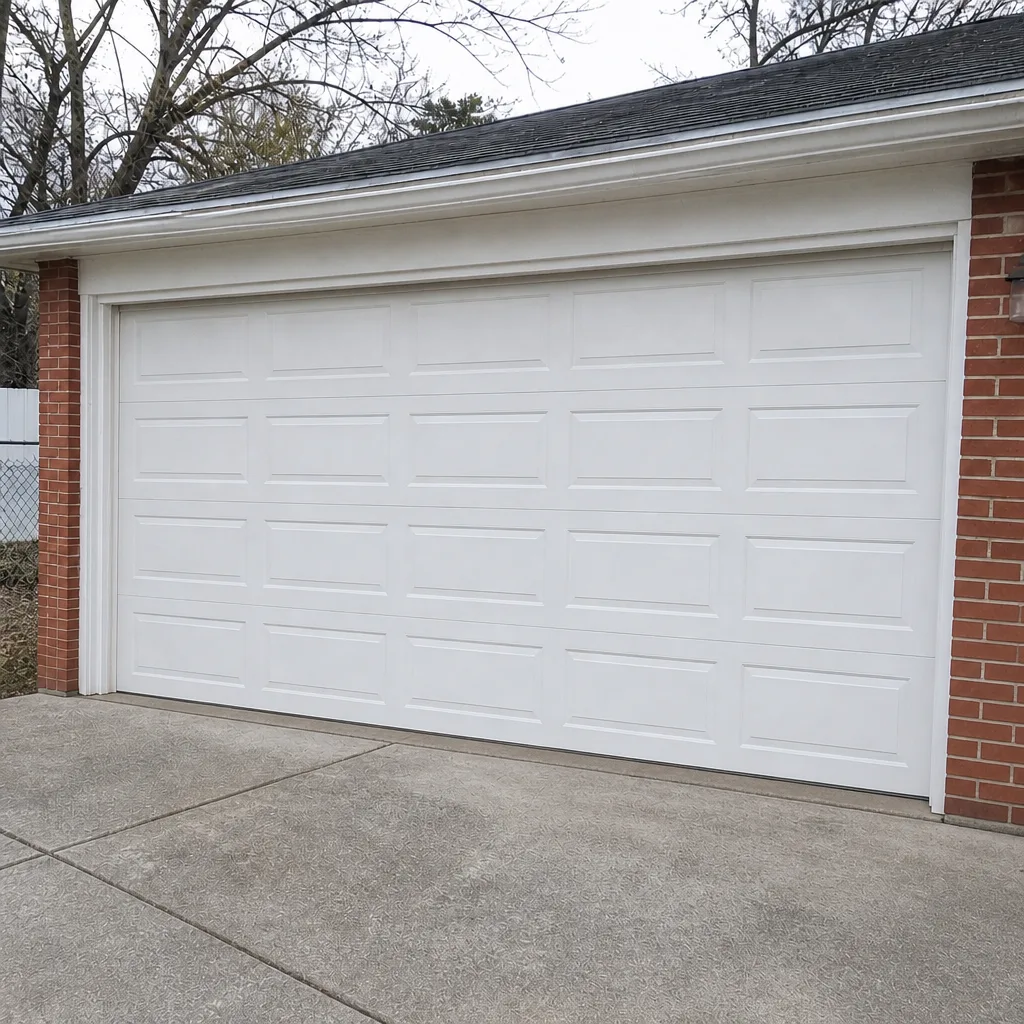
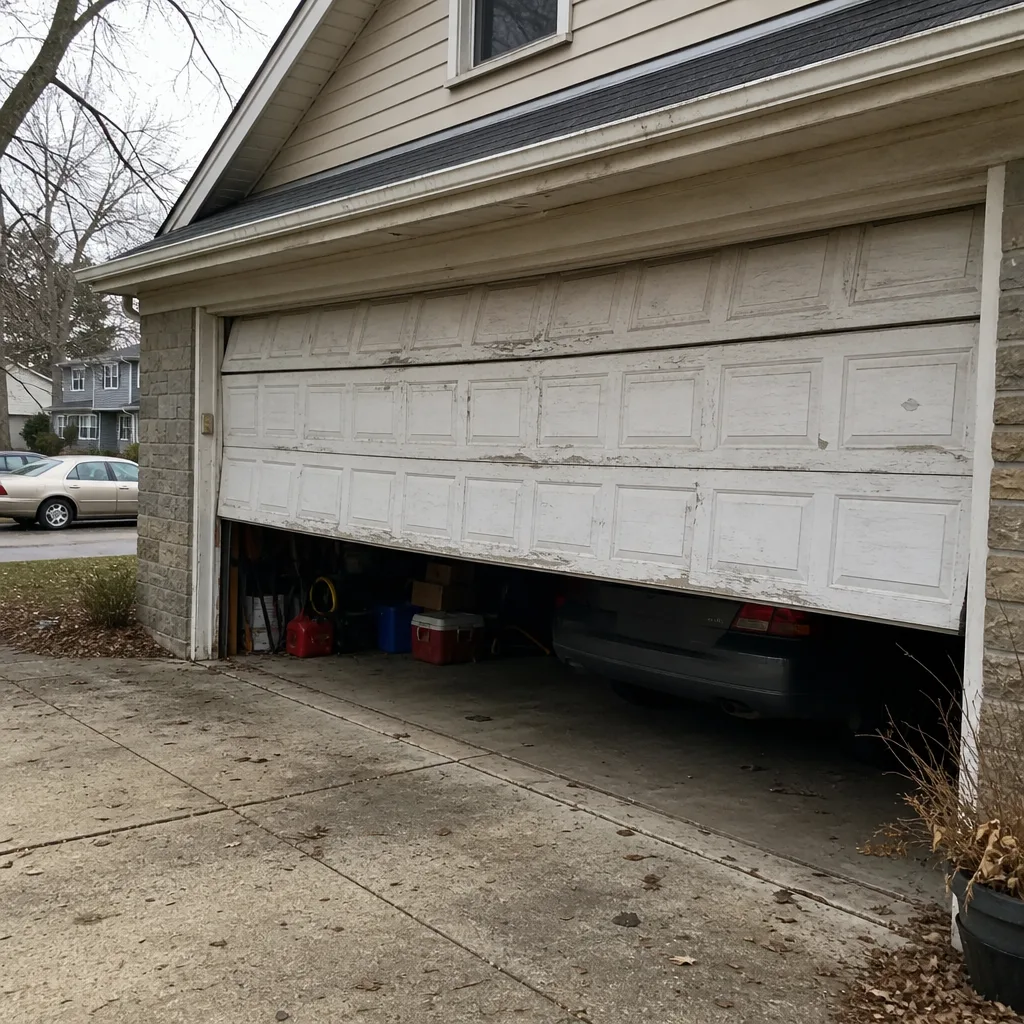
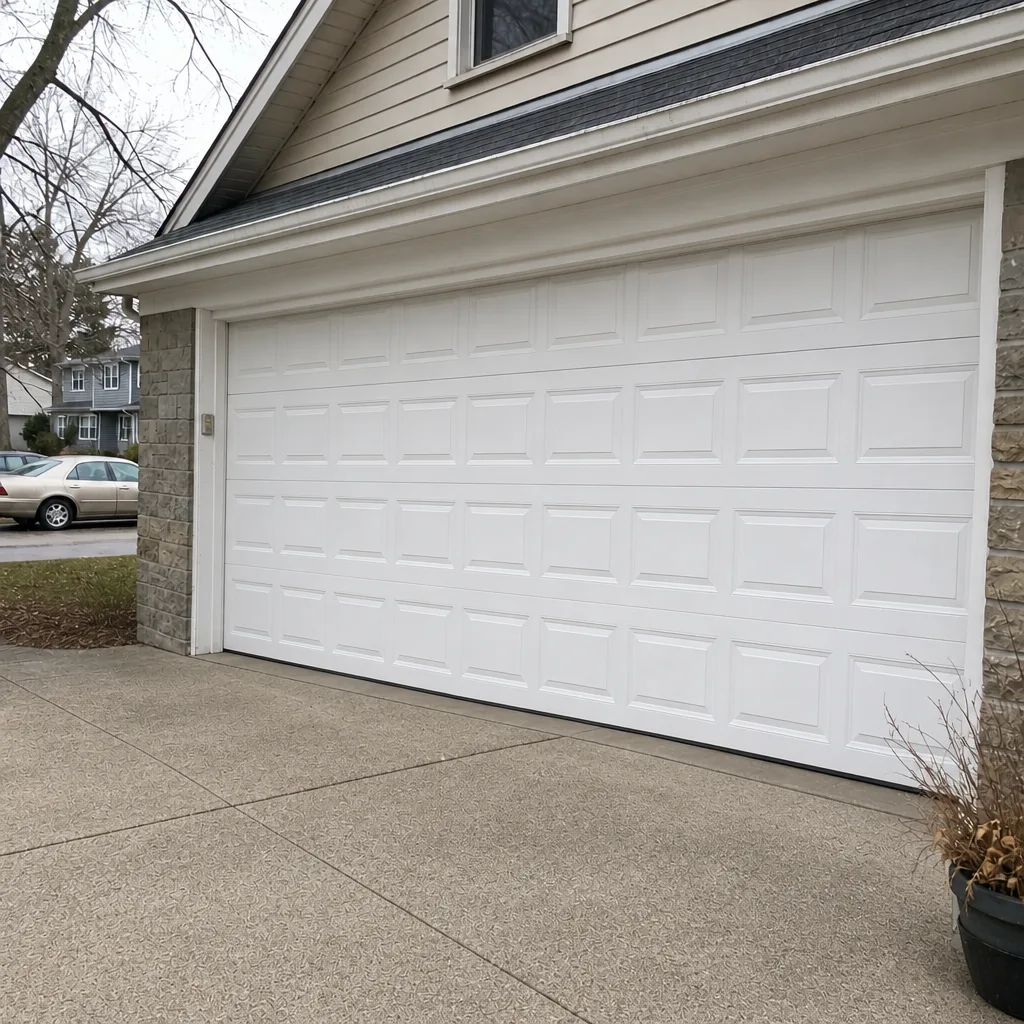
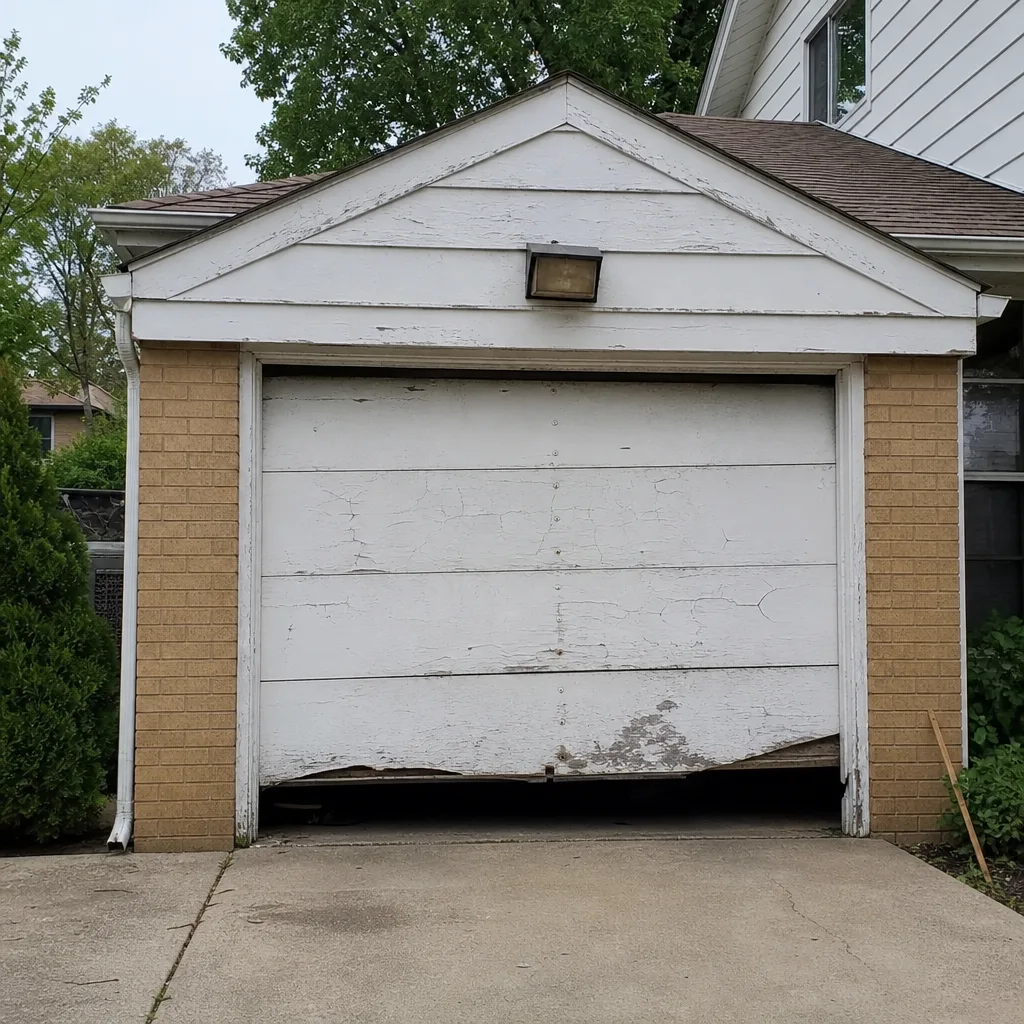
See the difference
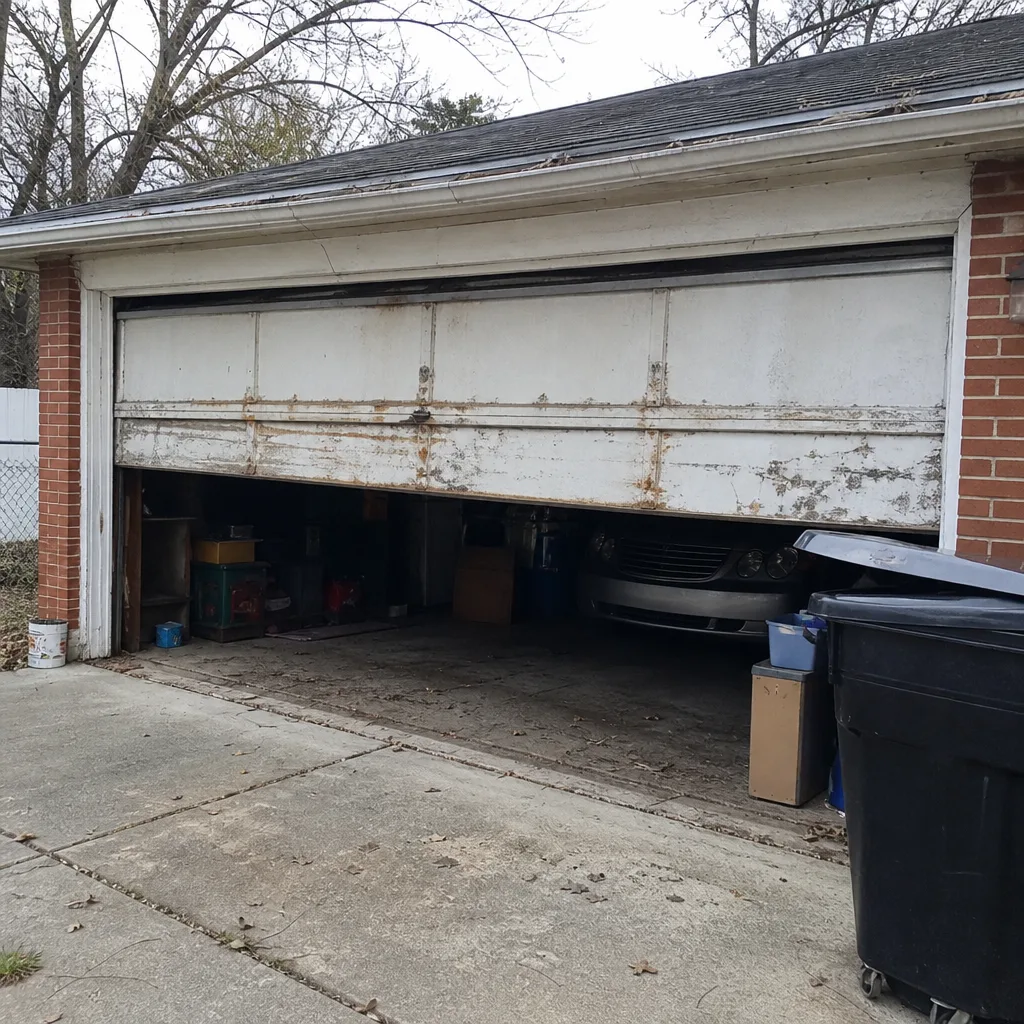 Before
 After
 Before
 After
 Before
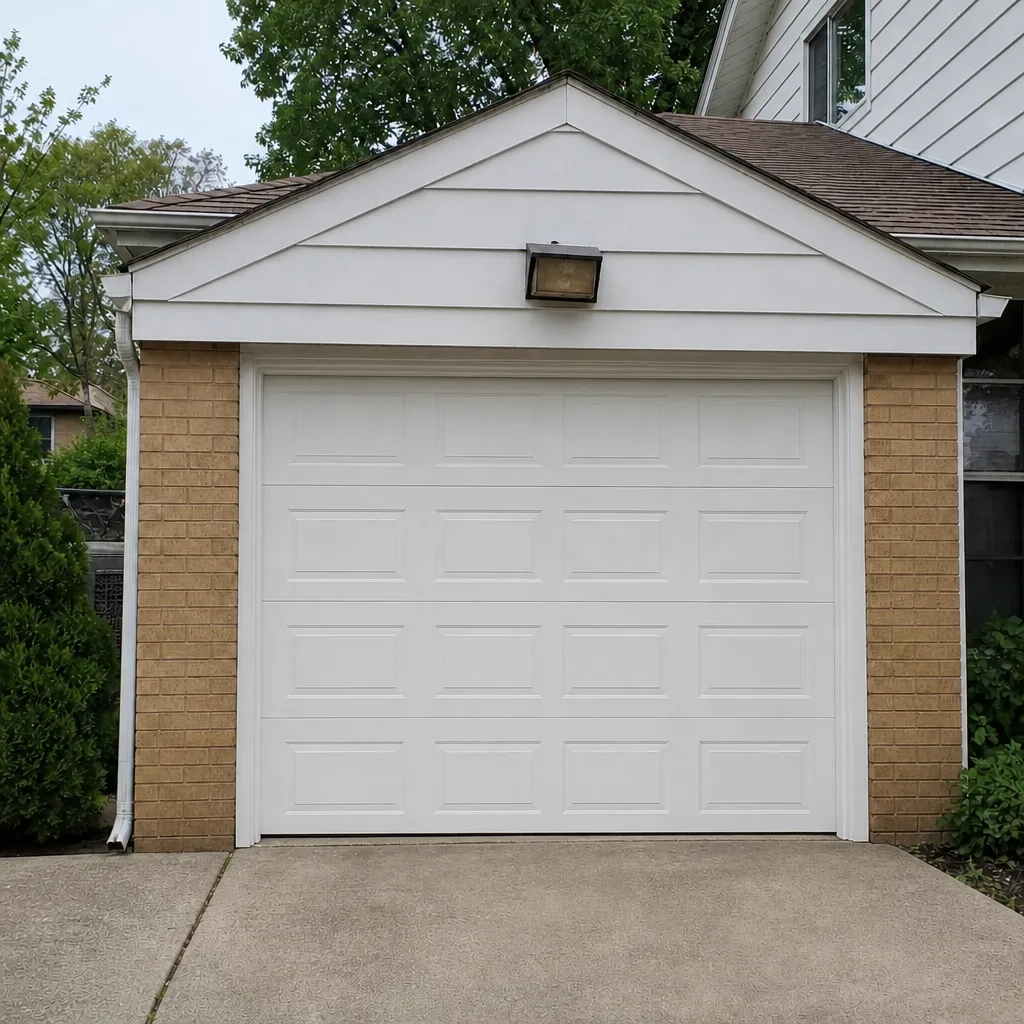 After
When to Call a Professional
Some problems wait for an appointment. Others don’t. Call a professional if you hear a loud snap from the garage, find the door crooked or hanging on one side, or can’t get the door to close at all. A door stuck open overnight is both a security gap and a hazard, which is exactly the situation emergency garage door service exists for. If your opener runs but the door doesn’t move, or the door reverses at the halfway point, that’s a repair, not a maintenance item. Below, our opener specialists can diagnose the issue if you’re unsure whether the door or the opener is at fault. Elmhurst Garage Door Repair Co offers free estimates in Elmhurst – call (833) 868-2688.
Frequently Asked Questions
No. Illinois doesn’t require a license specific to garage door contractors, which makes insurance verification and reference-checking your main protection when hiring in Elmhurst. Ask for a certificate of insurance showing general liability and workers’ comp, and confirm it’s current before booking. Call (833) 868-2688 for a free estimate, and we’ll walk you through what to check.
Spring repair pricing depends on the door, the spring type, and whether one spring or a matched pair is being replaced. A pair is usually replaced together, so a pair costs about twice a single-spring job. Ask for a written price with the cycle rating on it before work starts. Call (833) 868-2688 for an exact quote – estimates are free.
It matters a great deal. LiftMaster, Chamberlain, Genie, and Craftsman units are wired and programmed differently, and a technician who knows the model avoids the wrong parts and a second visit. We work on eight major brands, so tell us the label you can see and we’ll tell you what we can do. Our garage door opener repair covers both smart-home systems and older legacy openers.
Often, yes. We offer emergency garage door service for doors that can’t wait until the next business day, including a door stuck open. Call (833) 868-2688 and we’ll tell you the soonest we can get there. The written quote is agreed before any work starts.
The local professional we connect you with is licensed and insured as their state requires, and we’ll confirm coverage before the appointment. Our technicians have up to 13 years of experience, and spring work is handled as a core service rather than a referral. Call (833) 868-2688 for a free estimate.
Not if the scope matches the estimate. We quote and agree the price before any work starts, and the written estimate sets the final price. If the technician finds something materially different from what the phone conversation covered, you get a new written estimate and you approve it before anything changes.
The Bottom Line
Hiring a garage door contractor in Elmhurst comes down to a handful of checks most people skip. Verify insurance in two minutes. Ask the three phone questions that separate a specialist from a call center. Read the written estimate and make sure every part is named. Treat the cheapest quote as the one to read most carefully. Read the reviews for detail and spread, not just count. And take spring work seriously enough to hire a trained professional rather than trying it yourself. Do those things and you’ll get a door that works and a bill that matches the quote. Elmhurst Garage Door Repair Co is here for repair, opener work, and full installation, and for the door that can’t wait – call (833) 868-2688 for a free estimate. You can also learn more on our Elmhurst Garage Door Repair Co home page.
Written by the team at Elmhurst Garage Door Repair Co.