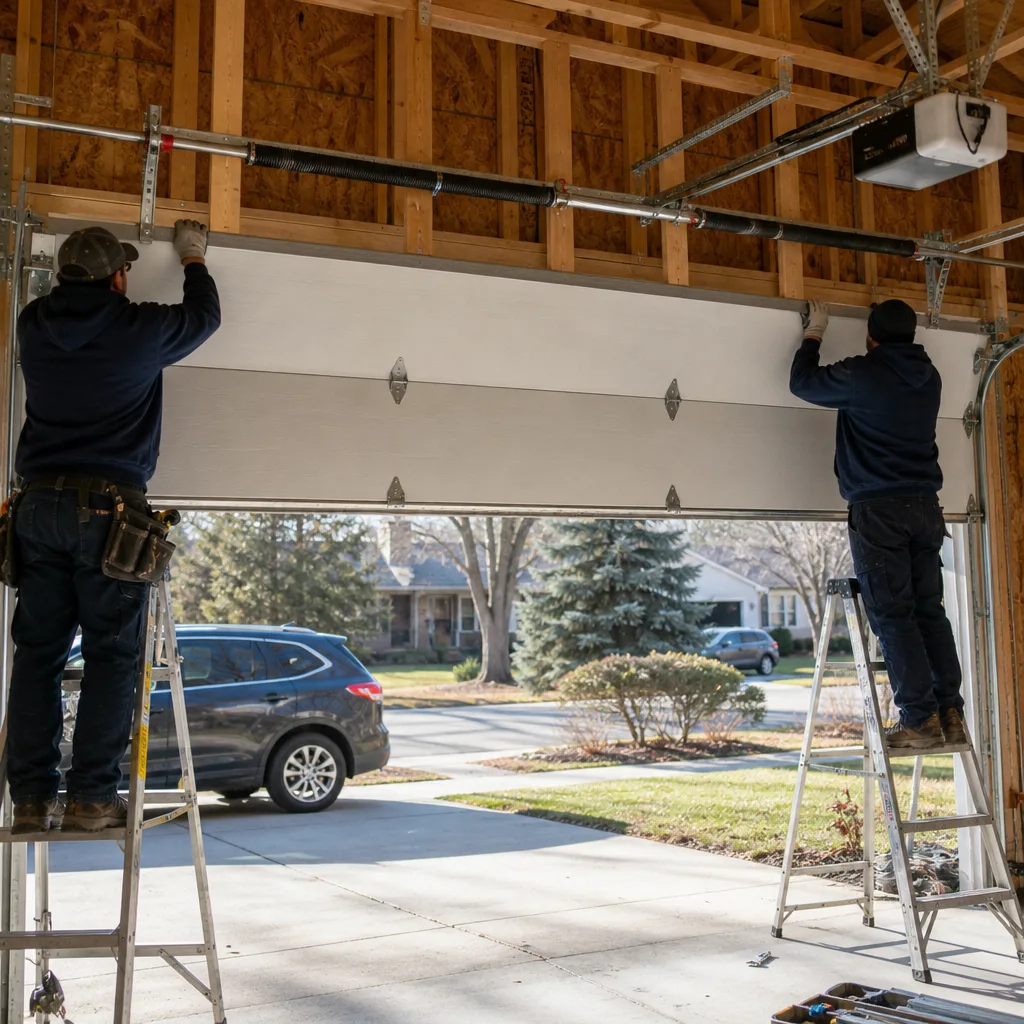
Last updated November 22, 2026
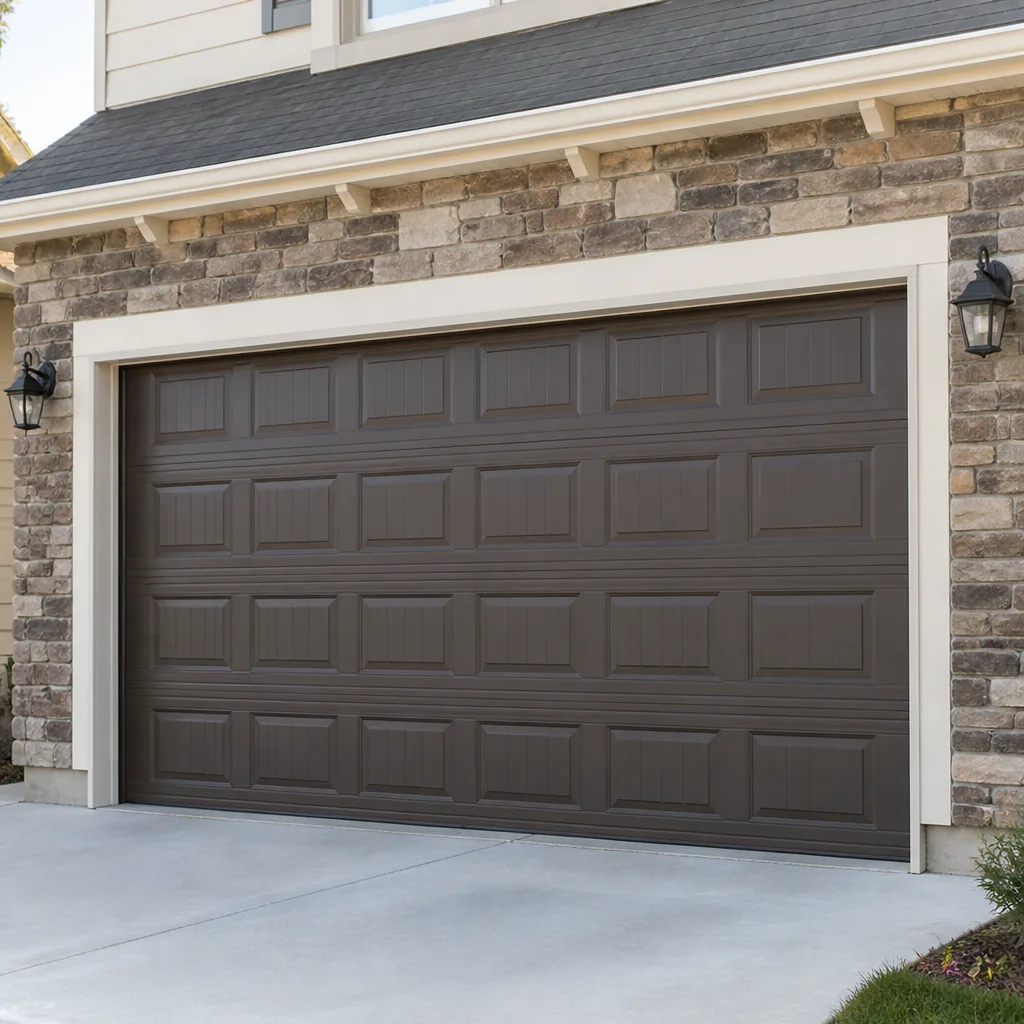 Raised-panel steel
 Carriage house
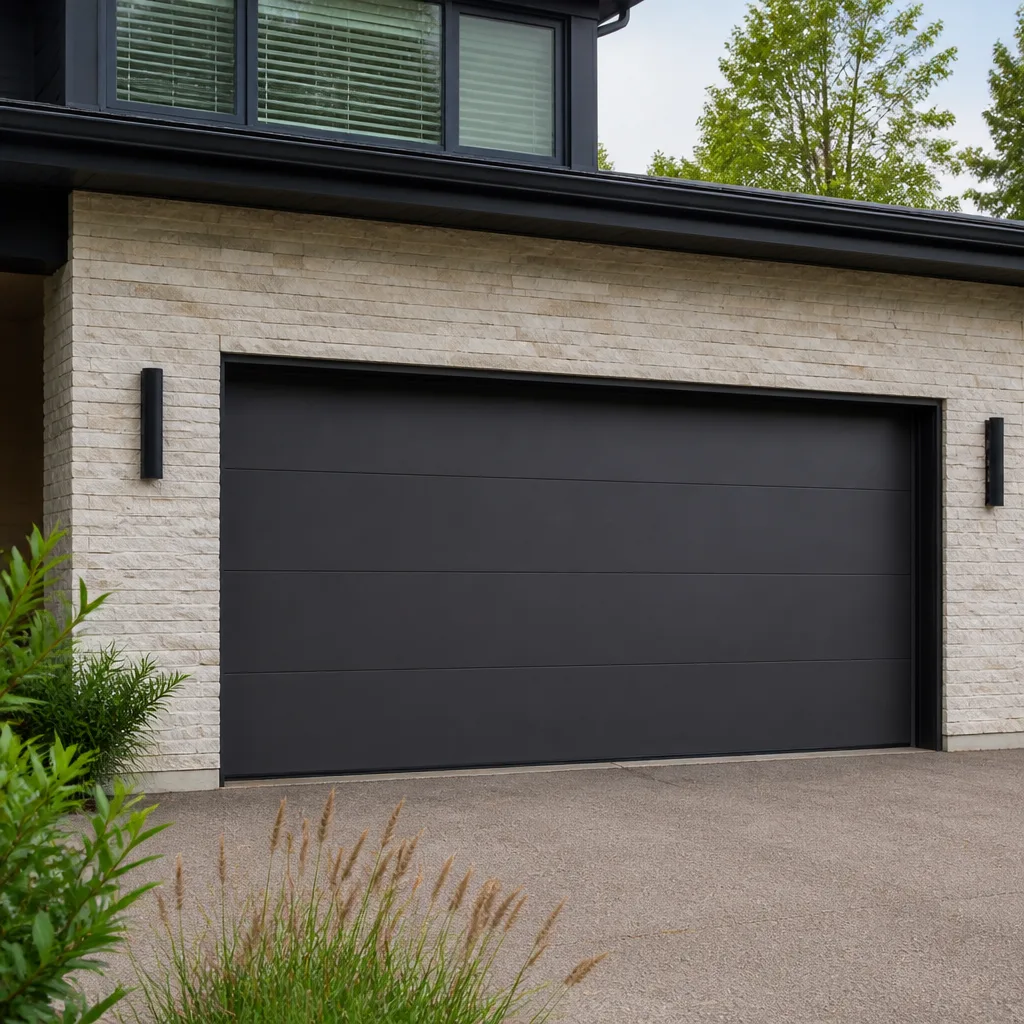 Modern flush
 Full-view glass
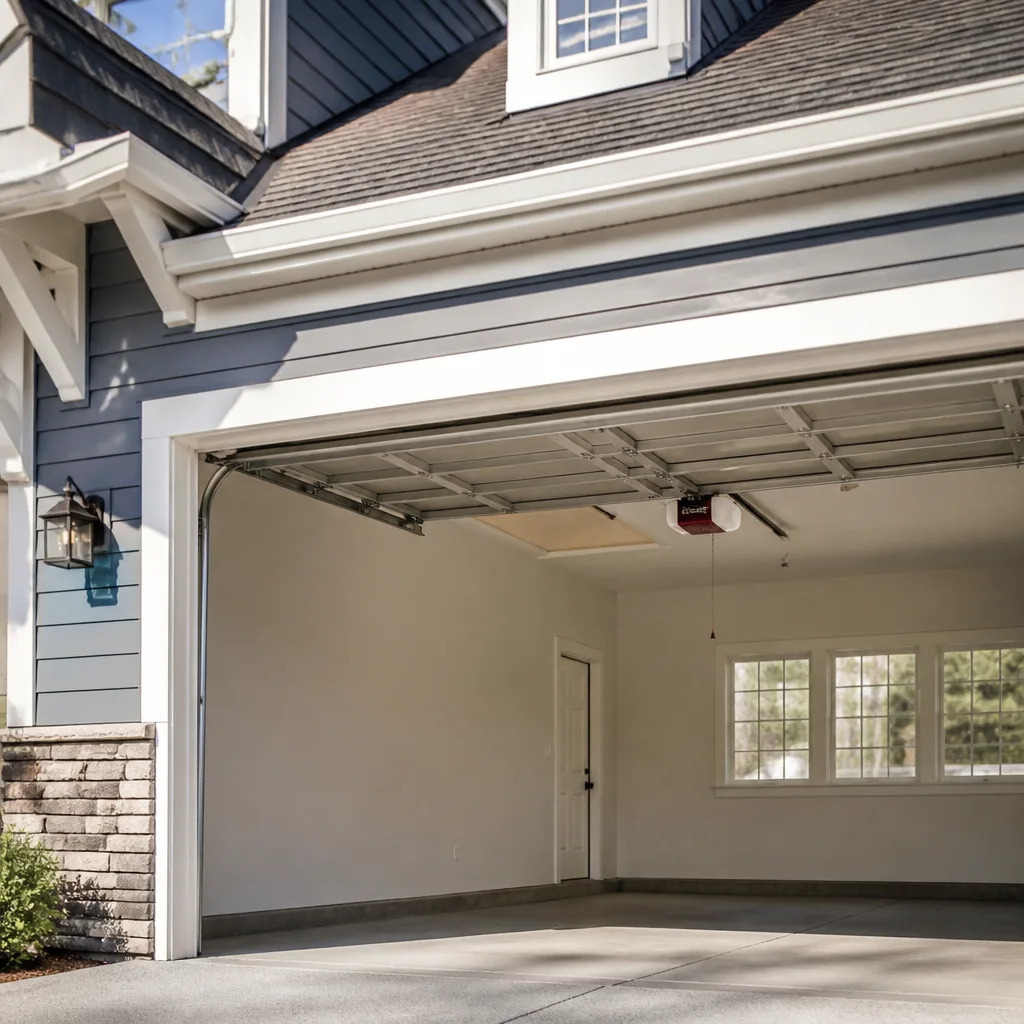 LiftMaster openers
 Chamberlain openers
Full 25-point door and opener safety check with every visit - springs, cables, rollers, tracks, and your LiftMaster or Chamberlain opener included
You get a price before we start. It does not change when the pro arrives.
Get your free estimateDIY vs Professional Garage Door: The Elmhurst Homeowner’s Decision Guide
Most DIY-versus-pro debates about garage doors get framed the wrong way. They turn into a question of skill, as if the only thing standing between you and a fixed door is confidence. That’s not the real line. The real line is physics: a torsion spring stores enough energy to seriously injure someone when it releases unexpectedly. That’s not a warning label, it’s the reason spring work sits in a different category from everything else on your door. But here’s the part nobody says clearly – most garage door maintenance and even some repairs are perfectly reasonable for a handy Elmhurst homeowner. This guide draws that line task by task, so you can decide based on actual stakes rather than fear or false confidence.
Quick Answer
Safe DIY tasks include lubricating tracks and rollers, tightening loose hinge and bracket bolts, testing the safety reverse, and clearing obstructions from the photo-eye sensors. Torsion spring replacement, cable replacement, and any work on a door whose spring has already broken should always go to a trained professional because of stored-energy injury risk. Anything involving electrical work inside the opener housing, a door that’s come off its tracks, or a door that won’t stay balanced is also professional territory. If you’re unsure which category your repair falls into, call us at (833) 868-2688 for a free estimate and a straight answer.
Styles & brands we work with
- Raised-panel steel
- Carriage house
- Modern flush
- Full-view glass
- LiftMaster openers
- Chamberlain openers
Table of Contents
- The Real Line: Injury Risk, Not Skill Level
- What’s Genuinely Safe to Do Yourself in Elmhurst
- What Requires Professional Tools and Training
- What Should Never Be DIY Regardless of Skill
- How DIY Work Can Void Your Manufacturer Warranty
- The Hidden Cost of a DIY Repair Gone Wrong
- Why Some YouTube Tutorials Don’t Apply to Your Elmhurst Door
- When to Call a Professional
The Real Line: Injury Risk, Not Skill Level
The garage door is the heaviest moving object in most homes. A standard single door runs a few hundred pounds; a double door more. That weight is balanced by a spring system designed to counter it, and that spring system is where the danger lives. Torsion springs – the horizontal coiled springs mounted on a shaft above the door – are wound under significant tension during installation. If that tension releases uncontrolled, the spring or the tools used to wind it can move with enough force to cause serious injury. Cable assemblies under load are the same category.
Extension springs, the older design mounted alongside the horizontal tracks, are a different setup. They’re still dangerous if they fail because stored energy has to go somewhere, but they’re generally considered less hazardous to service than torsion springs. Many homes built before the 1990s use extension springs. Most doors installed since use torsion systems, and that distinction matters for this guide.
So the line isn’t “am I handy?” The line is:
- Stored energy and heavy moving weight – professional only. Torsion springs, extension springs under load, tensioned cables, the full door assembly when it’s off track.
- Precision alignment and adjustment – usually professional. Spring balance, cable equalization, opener travel limits and force settings can go either way depending on the job and your comfort level.
- Cleaning, lubricating, tightening, testing – safe to do yourself. These don’t involve disassembling any load-bearing component.
- Anything electrical inside the opener – professional. The opener has capacitors and low-voltage control circuits that can bite.
That’s the framework. Everything that follows applies it to specific tasks in an Elmhurst garage, where seasons swing from humid summers to hard freezes and the door runs thousands of cycles a year.
What’s Genuinely Safe to Do Yourself in Elmhurst
Garage door maintenance that doesn’t touch the spring or cable system is well within reach for most homeowners. Doing it regularly is actually the best way to extend the life of your door and avoid problems down the road – especially here, where eight or nine months of freeze-thaw cycles and summer humidity put the hardware through a lot.
Here’s what we’d call genuinely safe:
- Lubricating the rollers, hinges, and tracks. Use a silicone-based or white lithium lubricant, not WD-40, on rollers and hinges. Wipe the tracks down with a damp rag and a tiny amount of lubricant – never grease them, because grease collects grit and accelerates wear. Do this every few months.
- Tightening loose bolts on hinges and brackets. A socket wrench and a few minutes is all it takes. Vibration loosens these over time, and a wobbly hinge produces a lot of noise.
- Testing the photo-eye safety sensors. With the door open, wave an object in front of the sensors. The door should reverse. If it doesn’t, the sensors need adjusting or replacing – that’s a reasonable DIY job for the sensors themselves.
- Testing the force setting. Put a roll of paper towels under the door and close it. The door should reverse when it meets the resistance. If it crushes the roll, the force setting needs adjusting – call a pro if you’re unsure.
- Clearing obstructions and straightening a slightly bent track. If a track is bumped or bent a quarter inch, a rubber mallet and a piece of wood can usually straighten it. If the bend is severe or the door won’t run, stop.
- Replacing the opener remote battery, programming a new remote, and resetting the wall control. These are consumer-level tasks covered in your opener’s manual.
We work on Elmhurst Garage Door Repair Co equipment every week, and the most common preventive failures we see – worn rollers, stripped hinge screws, misaligned sensors – are all things a homeowner can catch early with basic maintenance. That’s worth doing.
What Requires Professional Tools and Training
Some garage door work involves tooling that most homeowners don’t own and skills that are acquired over years, not from a single video. This is the category where we see the largest number of half-finished jobs and re-injuries.
The tasks that require professional tools and training:
- Torsion spring replacement or adjustment. Winding a torsion spring requires a winding bar set, careful counting of quarter turns, and precise calibration of the spring to the door’s weight. This is the single most dangerous garage door task. For a clear picture of what that work involves and how it’s priced, see our guide on garage door spring repair.
- Extension spring replacement. Less dangerous than torsion, still dangerous. The door’s weight has to be supported, cables run, and the new springs matched to the door.
- Cable replacement or re-termination. Cables are under constant tension. If a cable snaps or is loosely secured, the door can drop on one side.
- Replacing a snapped or bent track. A minor bend is DIY-safe. A track that’s come loose from the wall, bent over an inch, or pulled the door out of square requires a professional to reset the whole system.
- Panel replacement on a sectional door. Panels have to be matched to the manufacturer and seated correctly in the track, hinge, and seal.
- Opener motor or capacitor replacement. The opener has a capacitor that holds a charge after power is disconnected. Remove the cover and you’re in a hot zone. For a breakdown of what professional diagnosis involves, our guide on garage door opener repair covers it.
- Door off-track or fallen off its hinges. Any door that’s come out of the track is unstable. Don’t try to coerce it back in with muscle – have someone trained inspect the cables, hinges, and spring balance first.
If any of those describe your situation, the right call is a trained professional. That’s not gatekeeping – it’s the same logic as not doing your own electrical panel work.
What Should Never Be DIY Regardless of Skill
This list exists because we’ve seen what happens when someone with genuine mechanical confidence treats a torsion spring the way they’d treat a car serpentine belt. The difference isn’t about smarts. It’s about the amount of energy stored in that component and the fact that a mistake gives you no second chance.
Never DIY these, no matter how capable you are:
- Winding, unwinding, or adjusting a torsion spring. The spring is holding enough stored energy to fracture tools and cause serious injury. Winding bars slip, springs can snap mid-wind, and the stored energy doesn’t care how carefully you’re working. This is the line.
- Removing a door that’s hanging on one side. When one side of the door has lost its tension, the whole door becomes a lever. Let a pro stabilize it.
- Cutting or repositioning a tensioned cable. A high-tension cable carries enough force to whip and cut. Never cut a cable to remove a door.
- Touching the opener’s internal wiring or capacitor. The capacitor holds charge even after the unit is unplugged. This isn’t a repair manual task.
- Working under a door that’s supported only by the opener. The opener is not a hoist. If the spring system is compromised, the opener may not hold the door up – and if it gives way, the door comes down fast.
- Disconnecting the opener and manually forcing the door when it won’t roll. If the door won’t open by hand, something in the spring or cable system is already failing.
We do this work every day and it’s still a two-person job with proper tooling for our team. Our technicians have up to 13 years of experience, and spring work is a core specialty for us rather than something we refer out. That’s the category of work we’re describing.
How DIY Work Can Void Your Manufacturer Warranty
Before you pick up a wrench, it’s worth understanding what the manufacturer’s warranty on your door or opener actually covers. Most of the major brands – LiftMaster, Chamberlain, Genie, Clopay, Wayne Dalton, Raynor – offer warranties that carve out coverage for repairs done by unauthorized parties or with non-original parts. The warranty language varies by brand and by model, and it’s worth checking your specific terms before you start.
What typically voids or narrows a manufacturer’s warranty:
- Repairs performed by someone not authorized by the manufacturer. On a spring or opener repair, this can mean that component’s warranty no longer applies.
- Non-original parts installed. Aftermarket springs or photo-eyes can void sections of the warranty specific to those parts.
- Alterations to the opener, its wiring, or its force and travel limit settings beyond factory range. Adjusted travel limits can be traced, and manufactures may decline a claim.
- Installation not following the manual’s requirements. This includes for a full new-door installation.
How to check before you DIY:
- Find your opener or door’s model number (sticker on the opener housing, or the sticker on the door’s bottom panel).
- Look up the warranty terms for that model on the manufacturer’s website.
- Read the “exclusions” or “limitations” section specifically – this is where DIY carve-outs live.
- If it doesn’t list a limit, call the manufacturer’s support line and ask directly.
On a recent model, the difference between doing the work yourself and having a trained technician do it can be the difference between a warranty-covered replacement and a full out-of-pocket repair. That math alone often tips the decision toward professional work.
The Hidden Cost of a DIY Repair Gone Wrong
The visible cost of a DIY repair is the part and the day you spend on it. The invisible cost is what happens when it doesn’t work – or when it half-works and damages something adjacent. Both outcomes cost more than the professional job would have.
Where the money actually goes when a DIY garage door repair goes wrong:
- Parts markup at the box store. A single torsion spring from a home center runs more than a technician charges for the same part, because we buy them in volume and know which spring matches your door’s weight. The wrong spring accelerates wear on everything else.
- The emergency call premium. A DIY job that leaves your door stuck open overnight gets you a call at the emergency-service rate instead of the standard rate. That difference is real, and it’s the exact situation we handle through emergency garage door service.
- Damage to adjacent components. A misaligned track wears out rollers. A blown opener capacitor can fry the logic board. A door forced off track can bend hinges, pull cables, and crack panels. Each one adds cost.
- Repeat labor. The most common outcome isn’t a catastrophic failure – it’s a repair that works for a few weeks and then fails again, and now you’re paying a pro to undo the first job.
- Lost use of the garage. A detached garage is storage and parking. If the door won’t work for a week because you’re waiting on a part, that’s real inconvenience on top of the repair.
None of this is to discourage you from DIY. It’s to make sure the comparison you’re making is honest: the DIY job isn’t just “the part minus the labor,” it’s the part plus the risk of the above. When the math actually favors DIY, it usually isn’t close. When the math favors a pro, it usually isn’t close either.
Why Some YouTube Tutorials Don’t Apply to Your Elmhurst Door
This is the trap we see most often in our own work. Someone watches a well-produced video, buys the spring, and then finds out mid-job that the video’s technique assumes an extension spring setup – and their door has torsion springs. The two systems are mechanically different. The tools are different. The winding direction is different. The failure mode is different.
The pattern:
- Older doors (typically pre-1990) more often use extension springs mounted beside the horizontal tracks. Videos covering extension springs are, for many homes, the more common tutorials because the failure mode is more approachable.
- Most doors built in the last three decades use torsion springs – the horizontal black coil on a shaft above the door. This is the standard on homes built in Elmhurst in the 1990s and after. It’s also the more dangerous system to work on.
- The tools are not interchangeable. Extension spring jobs use a specific extension spring clamp. Torsion spring jobs require winding bars – and winding bars are not the same as screwdrivers. We’ve seen too many screws bent from people using them as substitute winding bars.
- The winding count is different. Torsion spring repair requires counting quarter-turns precisely against the door’s specification. A tutorial for an extension spring door has no equivalent step.
Before you follow any tutorial, look at your actual door first. Open your garage door, step back, and look at the spring. If it’s a coil of metal running horizontally above your door, you’re looking at a torsion spring system. If the springs are vertical tubes alongside the door tracks, it’s extension. The first is a professional job. Your video may not even be about the same system.
For a clearer look at what’s actually involved and how we handle it, see our breakdown of garage door spring repair.
Common Mistakes to Avoid
- Assuming your door is the same system as the one in the video. Check the spring type before you buy any part. Torsion and extension systems are not interchangeable and the tutorials don’t transfer.
- Using WD-40 on rollers and tracks. WD-40 is a solvent, not a lubricant, and it attracts dust that clogs the rollers. Use a lithium or silicone lubricant.
- Greasing the tracks. Tracks should be clean and lightly wiped, never greased. Grease turns into a grinding paste over time.
- Replacing only one torsion spring when the pair has matching cycle counts. Matched springs wear together. Replacing one and leaving the other means the older spring fails sooner – often within a few months – and you’re back in the same spot. A matched pair is usually replaced together.
- Adjusting the opener’s force setting to compensate for a binding door. If the door is binding, the fix is in the door, not in cranking up the opener’s force. Doing so masks a mechanical failure and stresses the opener motor.
- Ignoring seasonal maintenance before an Elmhurst winter. Freeze-thaw cycles loosen bolts and stiffen cold lubricant. A fall tune-up costs far less than a January emergency call.
- Buying a “universal” spring from a box store. Springs are matched to a specific door weight, track configuration, and cycle rating. A spring that’s close is not the same as the right one, and it can wear out the whole system.
When to Call a Professional
Call a professional in these specific situations:
- Any torsion or extension spring is broken, sagging, or making a loud snap.
- The door won’t open or close evenly, or is visibly off track.
- The door has come off its hinges, cable, or drum.
- The opener is overloading, smoking, or making a grinding or humming noise without moving the door.
- A panel is damaged or a door is off its balance enough that it won’t stay open or closed.
- You’ve already tried a repair and it didn’t work. Repeat jobs get more expensive the second time.
Elmhurst Garage Door Repair Co offers free estimates in Elmhurst – call (833) 868-2688 to schedule an assessment. We work on LiftMaster, Chamberlain, Genie, Clopay, Amarr, Wayne Dalton, Craftsman, and Raynor equipment, so we’ll diagnose your actual door and opener, not a generic setup. If a new door makes more sense than a repair, we can handle that too. For repair-only work, our guide to garage door repair lays out how we approach it.
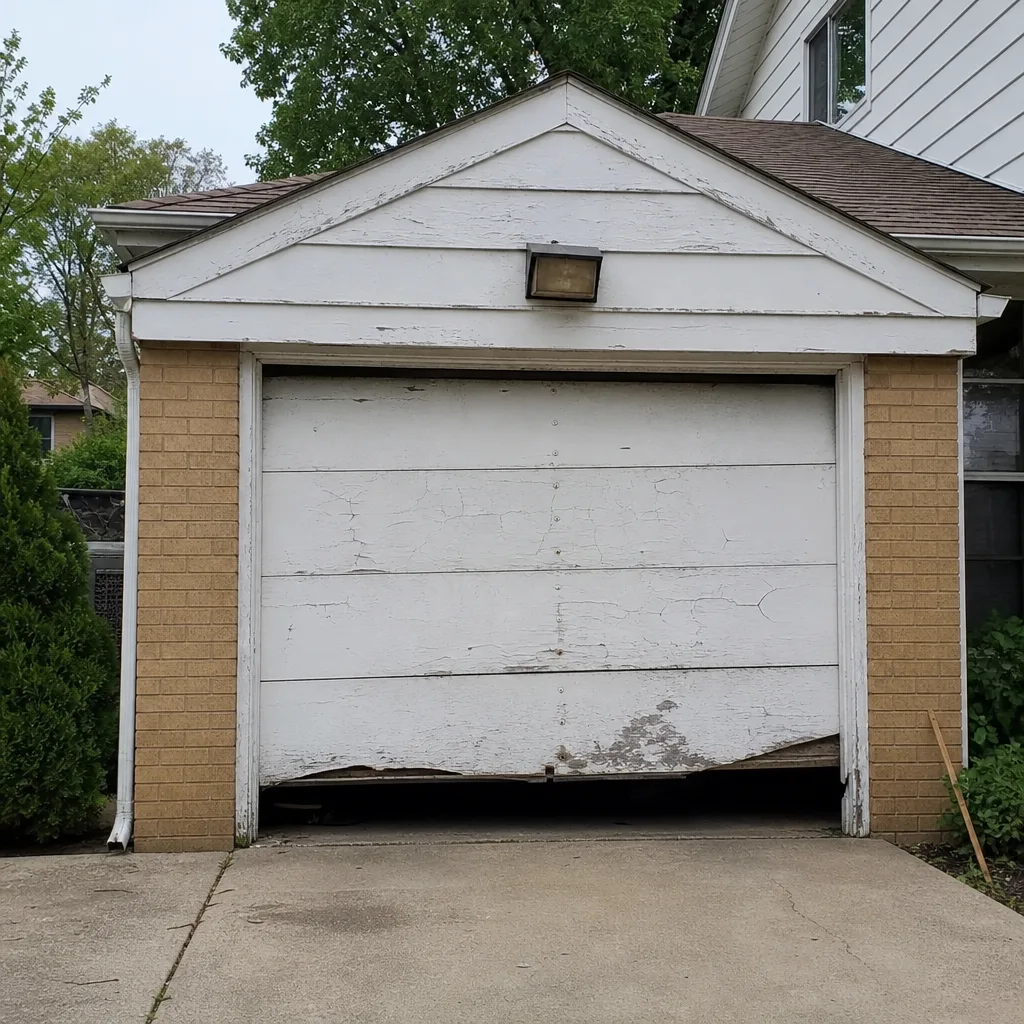
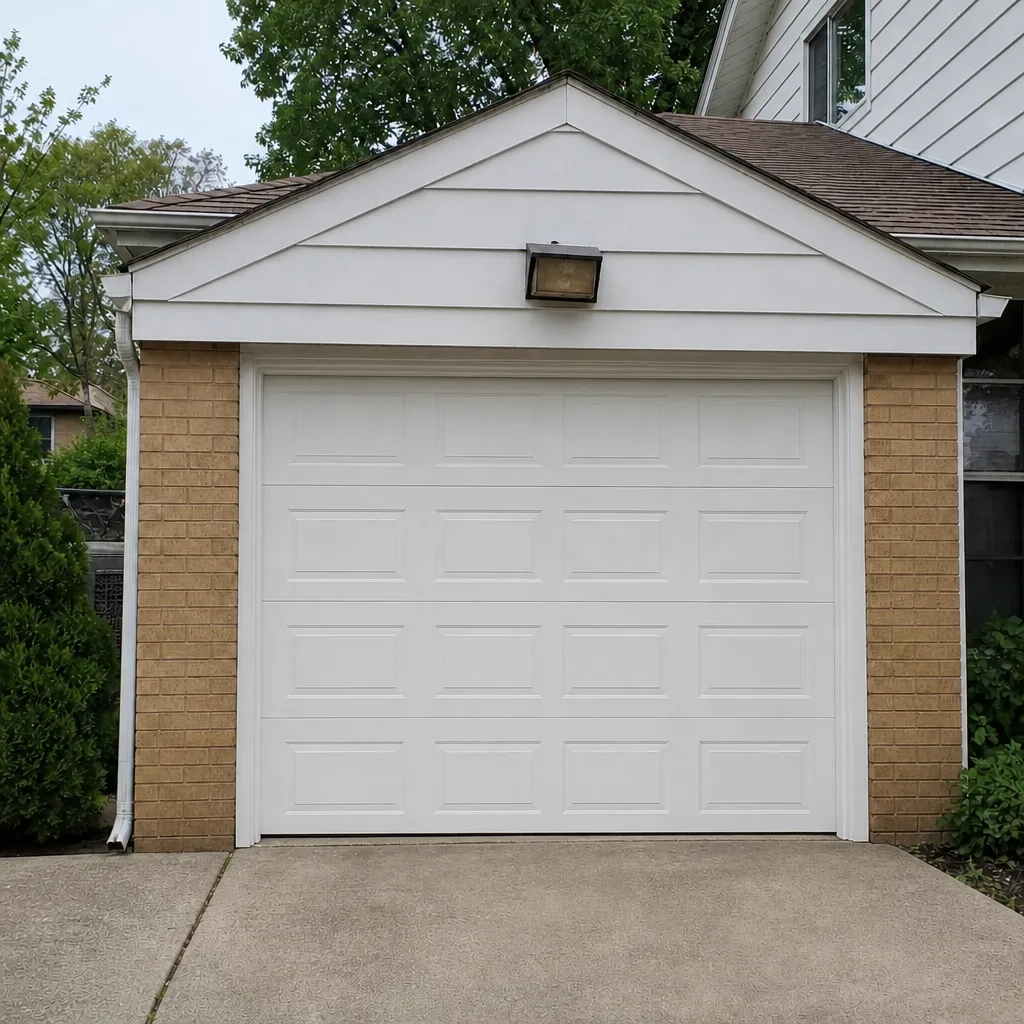
See the difference
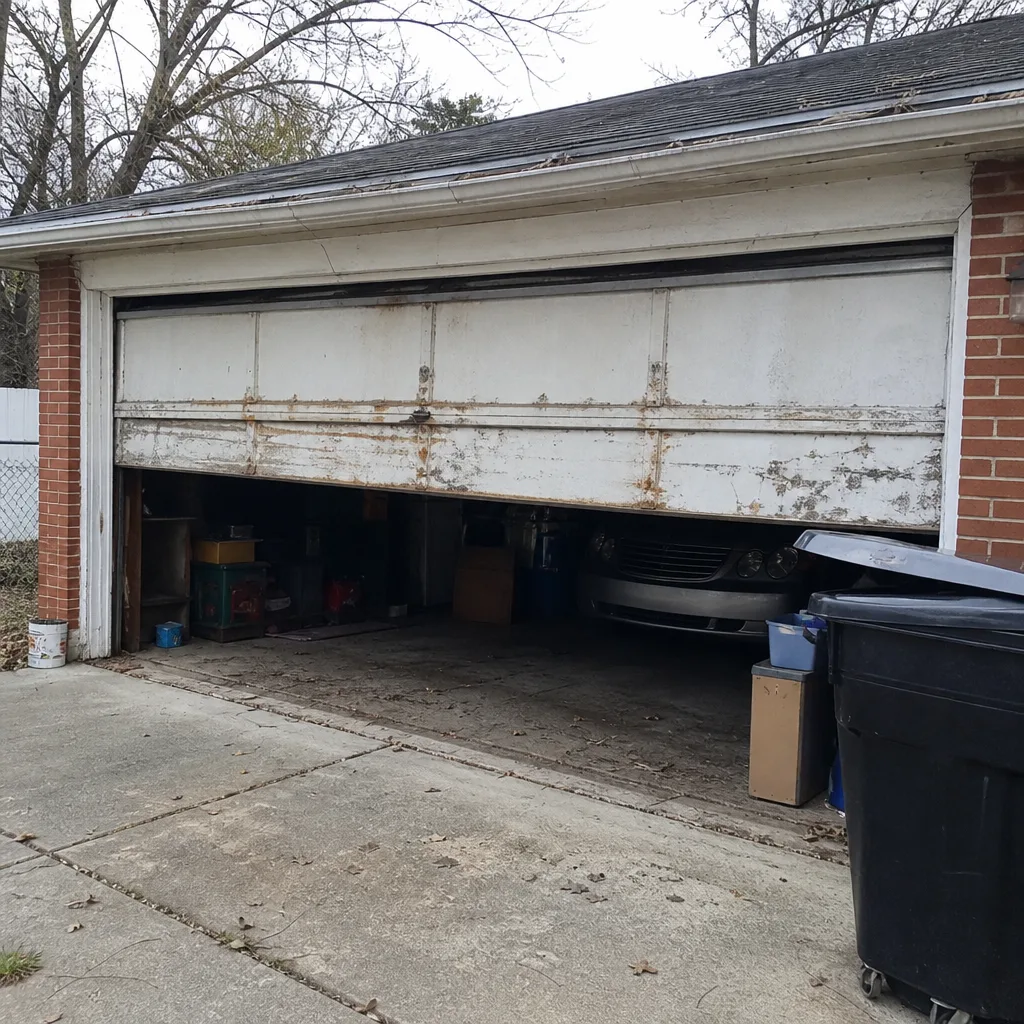 Before
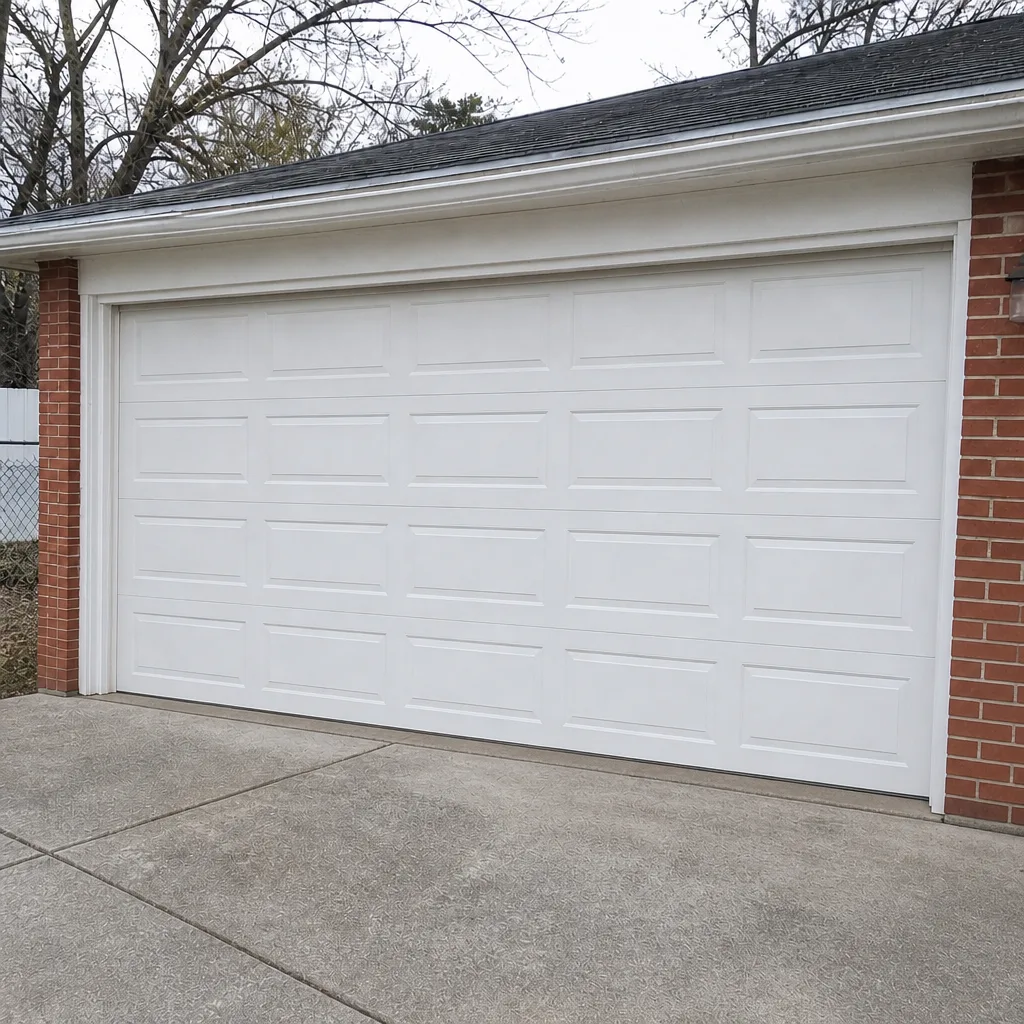 After
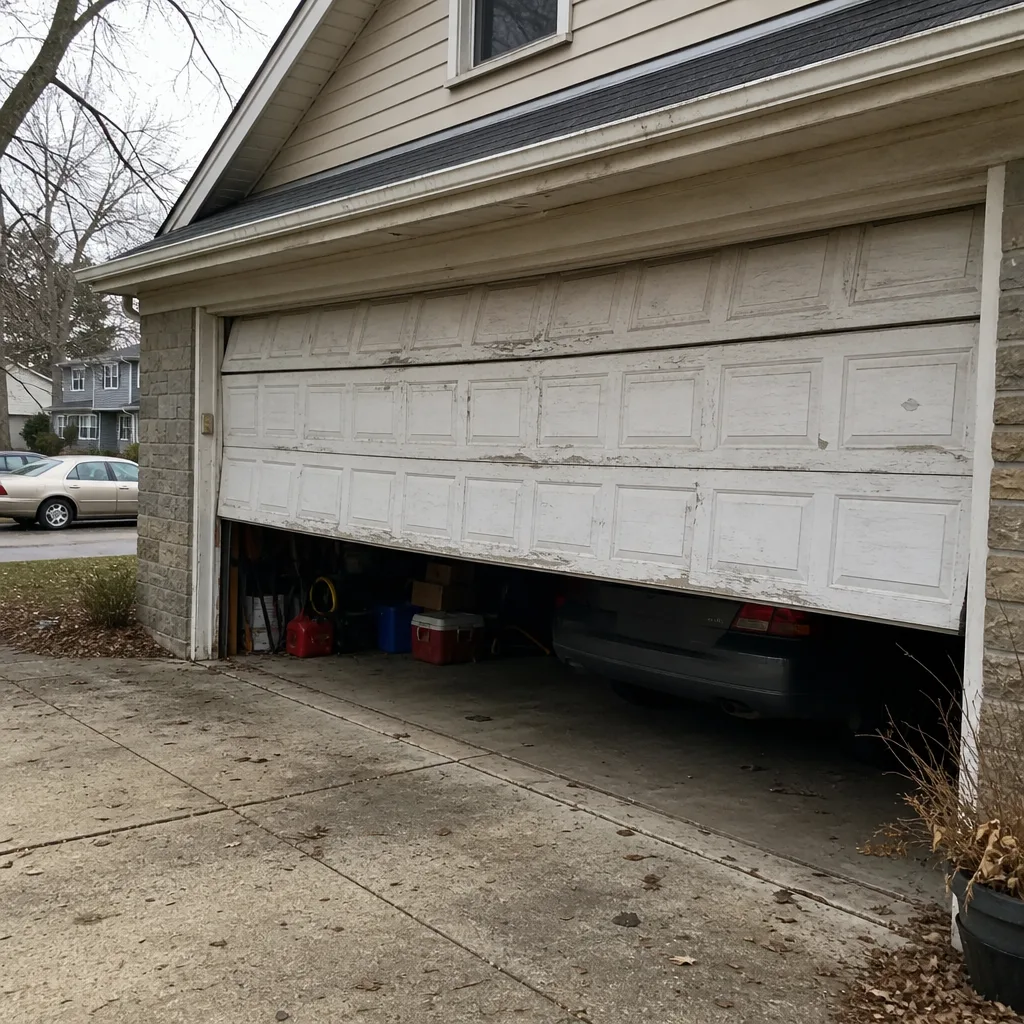 Before
 After
 Before
 After
Frequently Asked Questions
No – torsion spring replacement should always be done by a trained technician because of the stored energy in the spring. The spring holds enough force to cause serious injury if it releases unexpectedly, and winding it requires specialized winding bars and a precise turn count matched to your door’s weight. Call (833) 868-2688 for a free estimate on spring work.
In this market, spring repair typically runs in the range you’ll get from a written estimate, and a matched pair is usually replaced together because the two springs wear at the same rate. A single spring is quoted separately, and the pair is roughly double the single price. The exact number depends on the door and spring configuration, and you’ll get it in writing before any work starts – call (833) 868-2688.
Lubricating rollers and hinges, tightening loose bolts, testing safety sensors, clearing the tracks, and replacing an opener remote battery are all safe DIY tasks. Tasks that involve the spring, the cables, the track alignment, or the opener’s internal wiring are professional work. When in doubt, call us first – the estimate is free.
It can. Most of the major manufacturers – LiftMaster, Chamberlain, Genie, Clopay, Wayne Dalton, Raynor – limit certain warranty coverage to work done by authorized technicians or with original parts. Check your specific model’s warranty terms before you start; if it doesn’t say, call the manufacturer’s line and ask directly. If you’d rather not risk it, call us at (833) 868-2688 for a free estimate.
Look at the door with the springs visible. If the springs are horizontal coils running across the shaft above the door, it’s a torsion system and DIY work is off the table. If the springs are vertical tubes alongside each track, it’s extension. Nearly all doors built in Elmhurst after 1990 are torsion systems. If you can’t tell, call us and we’ll tell you over the phone.
We offer emergency garage door service for doors that are stuck open, stuck closed, or frozen out of position, and we do same-day work when our schedule allows. The fastest way to find out is to call (833) 868-2688 and describe the situation. For a non-emergency repair or a full new-door install, we’ll schedule the visit and measure and quote in writing before any work is ordered.
The Bottom Line
The real question in every DIY garage door decision is which of these three categories your job falls into: safe maintenance, professional-only work, or something in between that depends on your comfort level. Springs, cables, opener wiring, and off-track doors belong to pros – not because DIYers aren’t capable, but because the physics of stored energy doesn’t offer second chances. Everything else – lubricating, tightening, testing, troubleshooting – is yours to handle. Choose the work, not the skill. If you’re not sure, call (833) 868-2688 for a free estimate and we’ll tell you exactly where you stand. That’s the whole point of having a specialist you can call: you get the accurate answer in five minutes rather than the wrong one in five hours.
Whether it’s a snapped spring, a failed opener, or a full new-door install, the same company handles it end to end. Check out our Elmhurst Garage Door Repair Co team for the full range of what we do.
Written by the team at Elmhurst Garage Door Repair Co.